
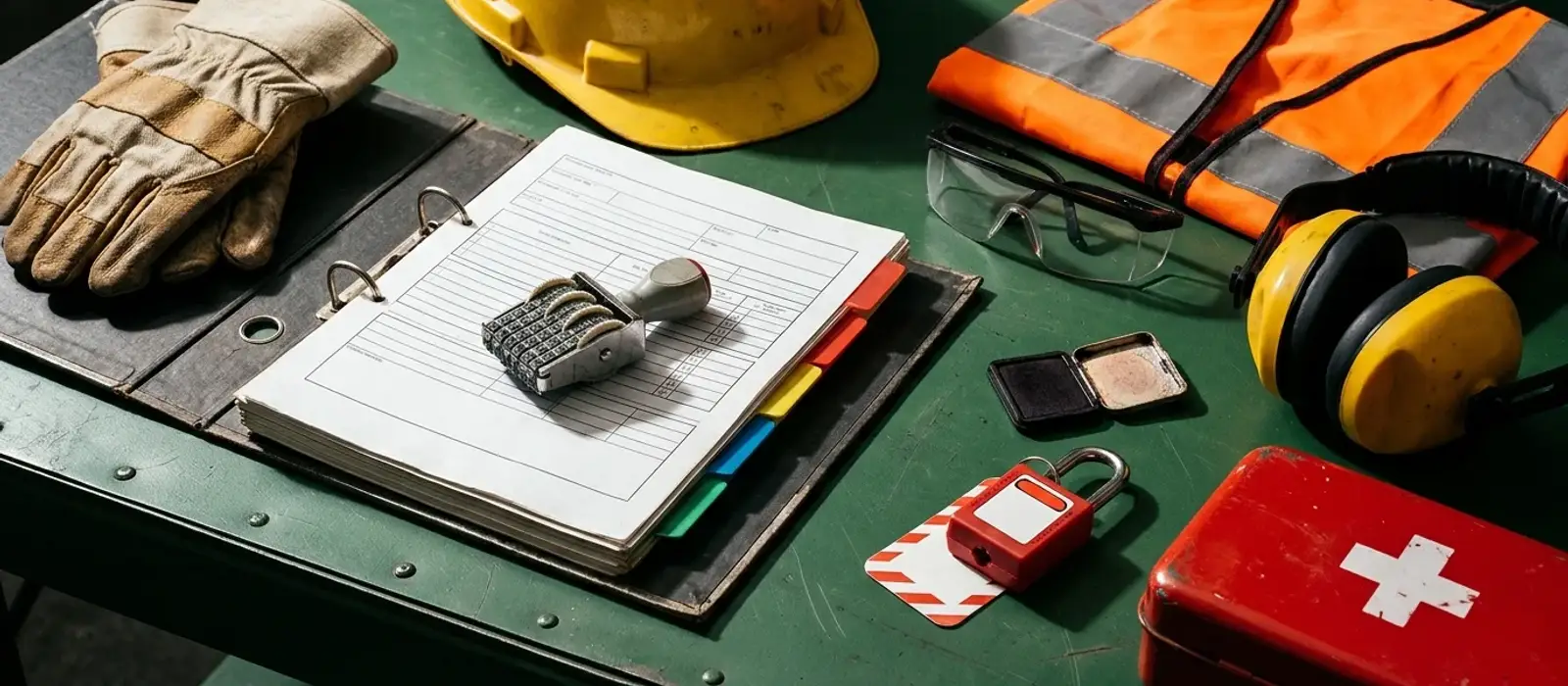
OSHA requires a written program only where a specific standard says so, and only if that standard applies to your workplace. The ones most employers run into are the hazard communication program (if employees are exposed to hazardous chemicals), the emergency action and fire prevention plans (when another standard requires them), the respiratory protection program, the bloodborne pathogens exposure control plan, lockout/tagout energy control procedures, the written PPE hazard assessment certification, the permit-required confined space program, and the respirable crystalline silica exposure control plan. Construction and hazardous waste work add more.
Written Programs at a Glance
| Written program | Required when | Review or update | Citation |
|---|---|---|---|
| Hazard communication program | Employees are exposed to hazardous chemicals | Maintained at each workplace; available to employees on request | 29 CFR 1910.1200(e) |
| Emergency action plan | An OSHA standard requires one | Reviewed with employees at assignment, when duties change and when the plan changes | 29 CFR 1910.38 |
| Fire prevention plan | An OSHA standard requires one | Reviewed with employees as needed for self-protection | 29 CFR 1910.39 |
| Respiratory protection program | Respirators are necessary to protect health, or the employer requires them | Updated as workplace conditions affecting respirator use change | 29 CFR 1910.134(c) |
| Bloodborne pathogens exposure control plan | Any employee has occupational exposure to blood or other potentially infectious materials | Reviewed and updated at least annually | 29 CFR 1910.1030(c) |
| Energy control (lockout/tagout) procedures | Employees service or maintain machines where unexpected energization could cause injury | Each procedure inspected at least annually | 29 CFR 1910.147(c) |
| PPE hazard assessment certification | All workplaces covered by the general PPE rule | Written certification of the assessment | 29 CFR 1910.132(d) |
| Permit-required confined space program | Employees will enter permit spaces | Available to employees and their representatives | 29 CFR 1910.146(c)(4) |
| Silica exposure control plan | Employees are covered by the respirable crystalline silica standard | Reviewed at least annually | 29 CFR 1910.1053(f)(2) |
| HAZWOPER safety and health program | Hazardous waste operations covered by the standard | Part of the site's overall program | 29 CFR 1910.120(b) |
| Fall protection plan (construction) | Leading edge, precast concrete or residential work where conventional fall protection is infeasible or creates a greater hazard | Kept up to date; changes approved by a qualified person | 29 CFR 1926.502(k) |
Plans Most Workplaces Need
Hazard Communication Program
Employers must develop, implement and maintain at each workplace a written hazard communication program. At minimum it describes how the label, safety data sheet and training requirements will be met, and includes a list of the hazardous chemicals known to be present. On multi-employer sites, such as a contractor working at your facility, the program must also cover how safety data sheets and labeling information are shared between employers. The program must be available on request to employees and their designated representatives.
Emergency Action and Fire Prevention Plans
These two plans are required when another OSHA standard calls for them. The portable fire extinguisher standard, for example, exempts employers from all of its requirements (unless another standard requires extinguishers) if they have a written total-evacuation policy backed by plans that meet these two sections and no extinguishers available in the workplace. Both must be in writing, kept in the workplace and available to employees, but an employer with 10 or fewer employees may communicate them orally. An emergency action plan must cover, at minimum, how to report a fire or other emergency, evacuation procedures and exit route assignments, procedures for employees who stay to run critical operations, how to account for everyone after evacuation, rescue and medical duties, and the name or job title of a contact for questions. A fire prevention plan must list major fire hazards and their controls, procedures for controlling flammable waste, maintenance of heat-producing equipment, and who is responsible for ignition and fuel source hazards.
PPE Hazard Assessment Certification
The general PPE rule requires a hazard assessment and a written certification that it was done. The certification must identify the workplace evaluated, the person certifying it, the date of the assessment, and that the document is a certification of hazard assessment.
Plans Triggered by Specific Hazards
Respiratory Protection Program
Wherever respirators are necessary to protect employee health, or the employer requires them, there must be a written program with worksite-specific procedures, run by a suitably trained program administrator. Some elements also apply when employees wear respirators voluntarily, though employees whose only use is voluntary use of filtering facepieces (dust masks) do not have to be included in the written program.
Bloodborne Pathogens Exposure Control Plan
Any employer with an employee who has occupational exposure needs a written exposure control plan. It must include the exposure determination and the schedule and method for carrying out the standard's other requirements, be accessible to employees, and be reviewed and updated at least annually and whenever tasks or positions change. The annual review must also document consideration of safer medical devices.
Lockout/Tagout Energy Control Procedures
The control of hazardous energy standard requires an energy control program made up of procedures, employee training and periodic inspections. Procedures must be developed, documented and used, with a narrow exception for machines that meet all of the listed conditions in the standard. Each procedure must be inspected at least annually by an authorized employee other than the ones using it, and the employer must certify the inspection.
Permit-Required Confined Space Program
If the employer decides that employees will enter permit spaces, it must develop and implement a written permit space program that is available for inspection by employees and their authorized representatives.
Silica Exposure Control Plan
Employers covered by the general industry silica standard must have a written exposure control plan describing the tasks that involve silica exposure, the engineering controls, work practices and respiratory protection used for each task, and housekeeping measures. It must be reviewed at least annually and made available to employees on request. Construction has its own silica standard.
Construction and Hazardous Waste Programs
HAZWOPER requires a written safety and health program for employees in hazardous waste operations, designed to identify, evaluate and control hazards and provide for emergency response. A program written to meet other federal, state or local rules is acceptable if it covers the required topics. For the related training hours, see HAZWOPER training hours.
In construction, a written fall protection plan is an option, not a default. It may be used only for leading edge work, precast concrete erection or residential construction where the employer can show conventional fall protection is infeasible or creates a greater hazard. The plan must be prepared by a qualified person, be specific to the site, and be kept up to date.
Written Programs and Training Go Together
Nearly every standard that requires a written program also requires training on it, often on its own schedule. The respiratory and bloodborne pathogens rules require annual training, while lockout/tagout and confined space rules require retraining when duties or procedures change. Our guide to OSHA training requirements for employers lists the intervals, and the OSHA training finder matches training to job types. Forklift operators need training and a certification record but no written program; see forklift certification requirements.
If you would rather have a professional draft or audit your programs, browse safety training and consulting providers.
General information, not legal advice. Rules change and State Plan states may differ, so confirm with the current standard or your state agency.
Sources
- 29 CFR 1910.1200 Hazard communication
- 29 CFR 1910.38 Emergency action plans
- 29 CFR 1910.39 Fire prevention plans
- 29 CFR 1910.134 Respiratory protection
- 29 CFR 1910.1030 Bloodborne pathogens
- 29 CFR 1910.147 Control of hazardous energy
- 29 CFR 1910.132 PPE general requirements
- 29 CFR 1910.146 Permit-required confined spaces
- 29 CFR 1910.1053 Respirable crystalline silica
- 29 CFR 1910.120 HAZWOPER
- 29 CFR 1926.502 Fall protection systems criteria and practices
- 29 CFR 1910.178 Powered industrial trucks
- 29 CFR 1910.157 Portable fire extinguishers