
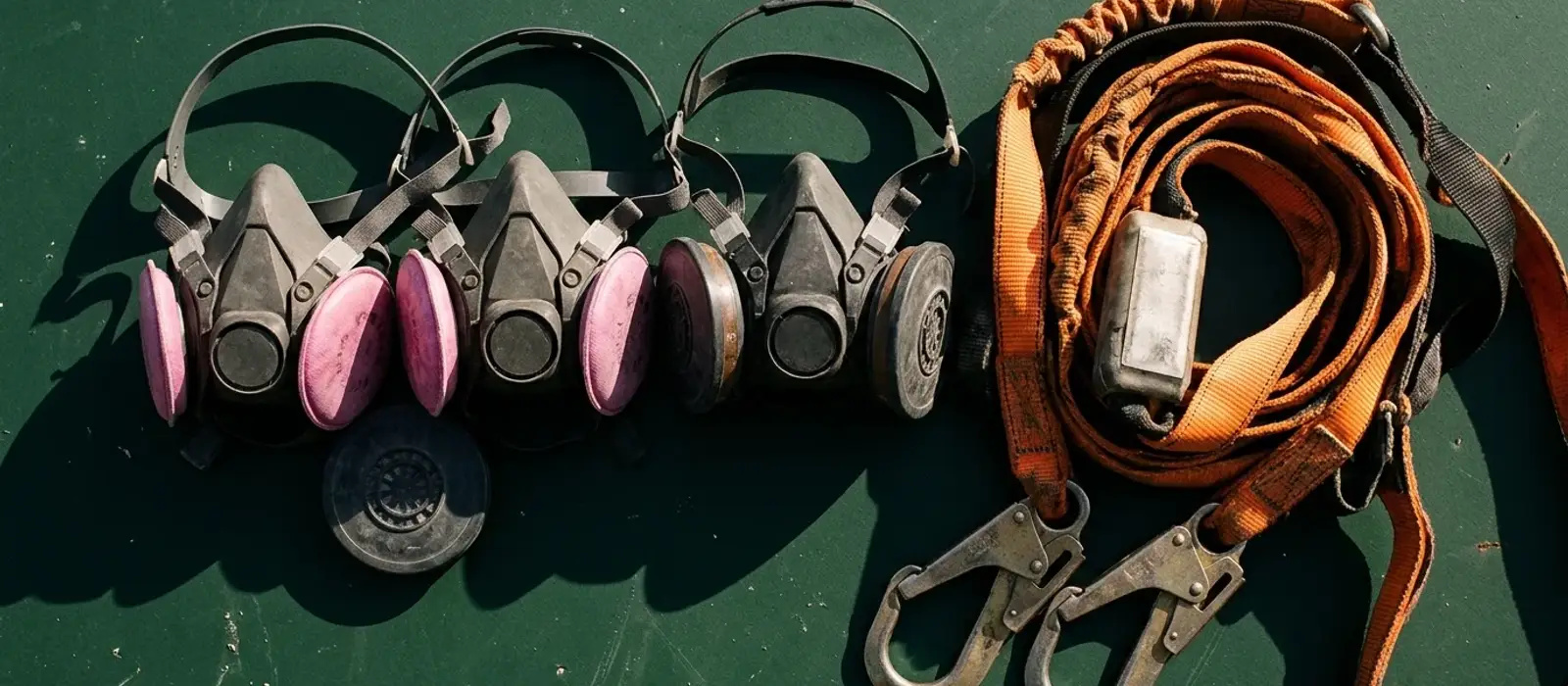
OSHA's respiratory protection standard, 29 CFR 1910.134, requires a fit test before an employee may be required to use any respirator with a tight-fitting facepiece, whether negative or positive pressure. The test must use the same make, model, style and size of respirator the worker will actually wear. After that, the test is repeated whenever a different facepiece is used and at least annually. Below is what the regulation says about timing, test methods, pass levels, facial hair and the records you must keep.
When a Fit Test Is Required
Paragraph 1910.134(f)(2) sets three triggers for a fit test:
- Before initial use of the respirator.
- Whenever a different facepiece is used, meaning a change in size, style, model or make.
- At least annually after that.
Paragraph (f)(3) adds a fourth trigger. The employer must conduct an additional fit test when the employee reports, or the employer, physician or other licensed health care professional (PLHCP), supervisor or program administrator observes, changes in the employee's physical condition that could affect fit. The standard lists facial scarring, dental changes, cosmetic surgery and an obvious change in body weight as examples.
If an employee passes a test but later tells the employer the fit is unacceptable, paragraph (f)(4) requires that they get a reasonable opportunity to pick a different facepiece and be retested.
Fit testing is one part of a written respiratory protection program. The same standard requires annual respirator training under paragraph (k)(5), and paragraph (c)(4) requires the employer to provide respirators, training and medical evaluations at no cost to the employee. If you need help running the program, see our directory of occupational health clinics, which often handle medical evaluations and fit tests, or safety training and consulting firms.
Qualitative vs. Quantitative Fit Testing
The fit test must follow an OSHA-accepted protocol from Appendix A of 1910.134. There are two families of methods.
Qualitative fit testing (QLFT) is a pass/fail test that relies on the wearer detecting a test agent by smell, taste or irritation. Appendix A lists four accepted QLFT protocols: isoamyl acetate (banana odor), saccharin solution aerosol, Bitrex (denatonium benzoate) solution aerosol, and irritant smoke (stannic chloride).
Quantitative fit testing (QNFT) uses an instrument to measure leakage into the facepiece and produces a numeric fit factor. Appendix A lists the generated aerosol protocol, the condensation nuclei counter (CNC) ambient aerosol protocol and its modified versions, and the controlled negative pressure (CNP) and CNP REDON protocols.
| Item | QLFT | QNFT |
|---|---|---|
| Result | Pass or fail | Numeric fit factor |
| Allowed for | Negative pressure air-purifying respirators that must achieve a fit factor of 100 or less | Any tight-fitting respirator |
| Pass level, half facepiece | Pass/fail by protocol | Fit factor of 100 or more |
| Pass level, full facepiece | Not allowed where a fit factor above 100 is needed | Fit factor of 500 or more |
| Record | Pass/fail result | Fit factor and strip chart or other recording |
These limits come from paragraphs (f)(6) and (f)(7). In practice, a full facepiece respirator that is relied on for protection above a fit factor of 100 needs a quantitative test.
Tight-fitting powered air-purifying respirators and atmosphere-supplying respirators are still fit tested in negative pressure mode, regardless of how they operate in use, per paragraph (f)(8). For QLFT, the facepiece is temporarily converted to a negative pressure respirator or a surrogate facepiece with the same sealing surfaces is used. For QNFT, a sampling probe or adapter is used. Any modification must be fully removed before the facepiece goes back into service.
What Happens During the Test
Appendix A Part I sets general procedures that apply to every accepted method:
- The test subject picks the most acceptable respirator from a sufficient number of models and sizes, after being shown how to put it on, position it and set strap tension.
- The chosen respirator is worn at least 5 minutes before the test starts.
- The test is done while wearing any safety equipment used on the job that could interfere with fit, such as eye protection.
- The respirator may not be adjusted once the exercises begin. Any adjustment voids the test, and it must be repeated.
For most protocols, the worker performs these exercises, each for one minute except the grimace, which lasts 15 seconds:
- Normal breathing
- Deep breathing
- Turning head side to side
- Moving head up and down
- Talking (for example, reading the Rainbow Passage)
- Grimace (QNFT only)
- Bending over, or jogging in place where the test setup does not allow bending
- Normal breathing
The modified CNC ambient aerosol protocols, CNP and CNP REDON use their own shorter exercise sets defined in Appendix A. For the saccharin protocol, the subject may not eat, drink anything except plain water, smoke or chew gum for 15 minutes before the test.
Appendix A also says people who administer QLFT must be able to prepare test solutions, calibrate equipment, perform tests properly and recognize invalid tests, and that QLFT equipment must be kept clean and well maintained.
Facial Hair and Other Seal Problems
Paragraph 1910.134(g)(1)(i) says the employer shall not permit tight-fitting respirators to be worn by employees who have facial hair that comes between the sealing surface of the facepiece and the face, or that interferes with valve function. The same rule applies to any other condition that interferes with the face-to-facepiece seal or valve function.
The rule turns on where the hair is, not on a beard length. Hair that stays entirely outside the seal and away from the valves is not addressed by this paragraph. Hair under the seal is.
Two related requirements apply to everyday use:
- Corrective glasses, goggles and other PPE must be worn so they do not interfere with the facepiece seal (paragraph (g)(1)(ii)).
- Workers must perform a user seal check every time they put on a tight-fitting respirator, using Appendix B-1 or manufacturer procedures shown to be as effective (paragraph (g)(1)(iii)). A seal check is not a substitute for the annual fit test.
Loose-fitting respirators have no face seal, so this paragraph covers tight-fitting facepieces only. Suppliers listed under safety equipment suppliers can help compare options, and our PPE checklist covers the broader hazard assessment.
Voluntary Use
When respirator use is not required and the employer allows workers to wear one voluntarily, paragraph (c)(2) requires the employer to give them the Appendix D information and to keep the program elements needed to make sure the worker is medically able to use the respirator and that it is cleaned, stored and maintained. Fit testing is not among the elements listed in that paragraph.
Fit Test Records You Must Keep
Paragraph 1910.134(m)(2) requires a record of each qualitative and quantitative fit test, including:
- The name or identification of the employee tested
- The type of fit test performed
- The specific make, model, style and size of respirator tested
- The date of the test
- The pass/fail result for QLFT, or the fit factor and strip chart or other recording of results for QNFT
Fit test records must be kept until the next fit test is administered. Medical evaluation records follow a different rule: they must be retained and made available under 29 CFR 1910.1020. The employer must also keep a written copy of the current respirator program, and these materials must be made available on request to affected employees.
Quick Compliance Checklist
- Fit test each tight-fitting respirator user before first use, on any facepiece change and at least every 12 months.
- Retest after facial scarring, dental work, cosmetic surgery or an obvious weight change.
- Use QNFT for full facepieces that must exceed a fit factor of 100.
- Do not allow tight-fitting respirators over facial hair at the seal or valves.
- Keep a record with employee, test type, exact respirator, date and result until the next test.
- Pair fit testing with annual respirator training. Find providers in our OSHA training finder.
General information, not legal advice. Rules change and State Plan states may differ, so confirm with the current standard or your state agency.